The room
Start with a real
everyday life.
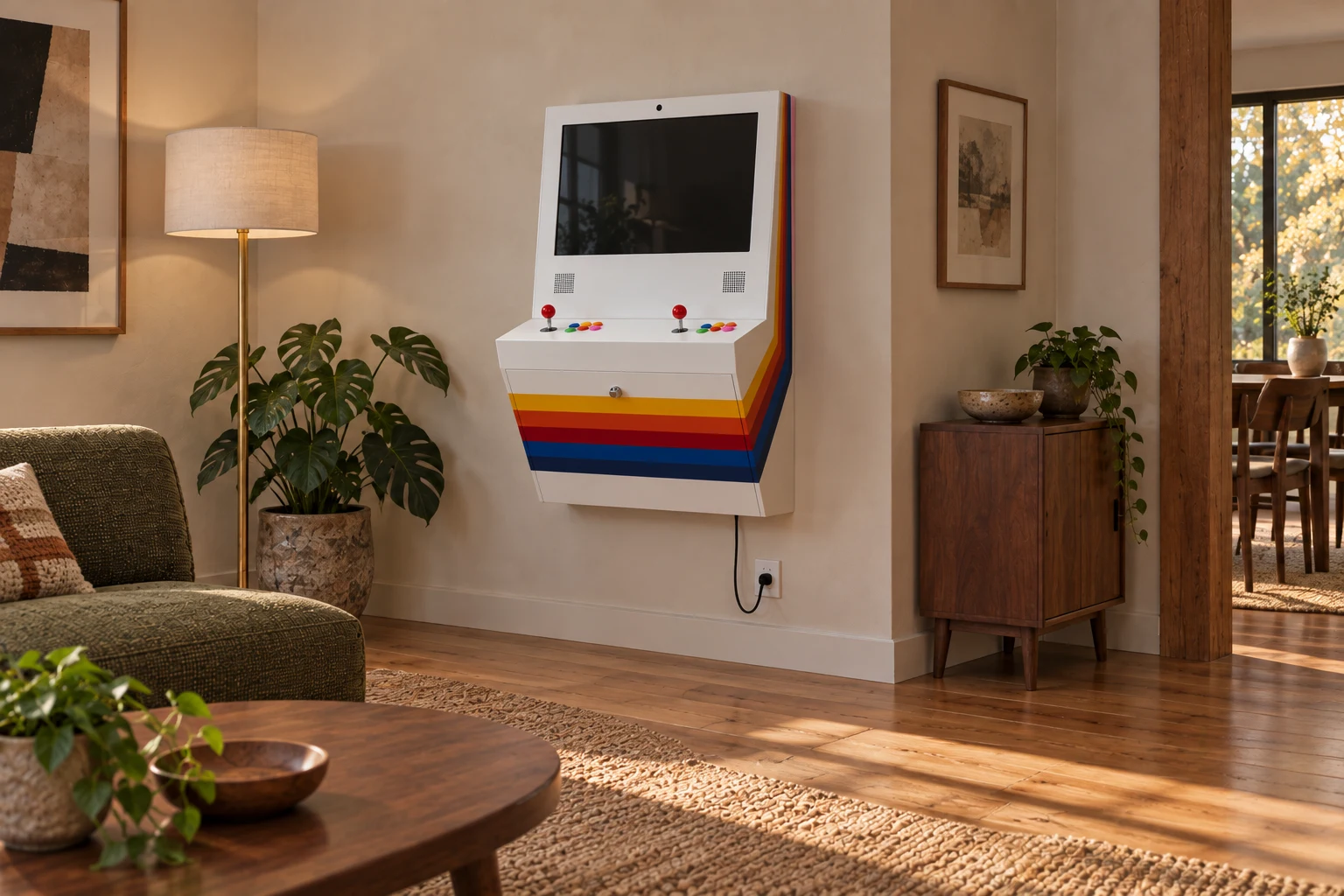
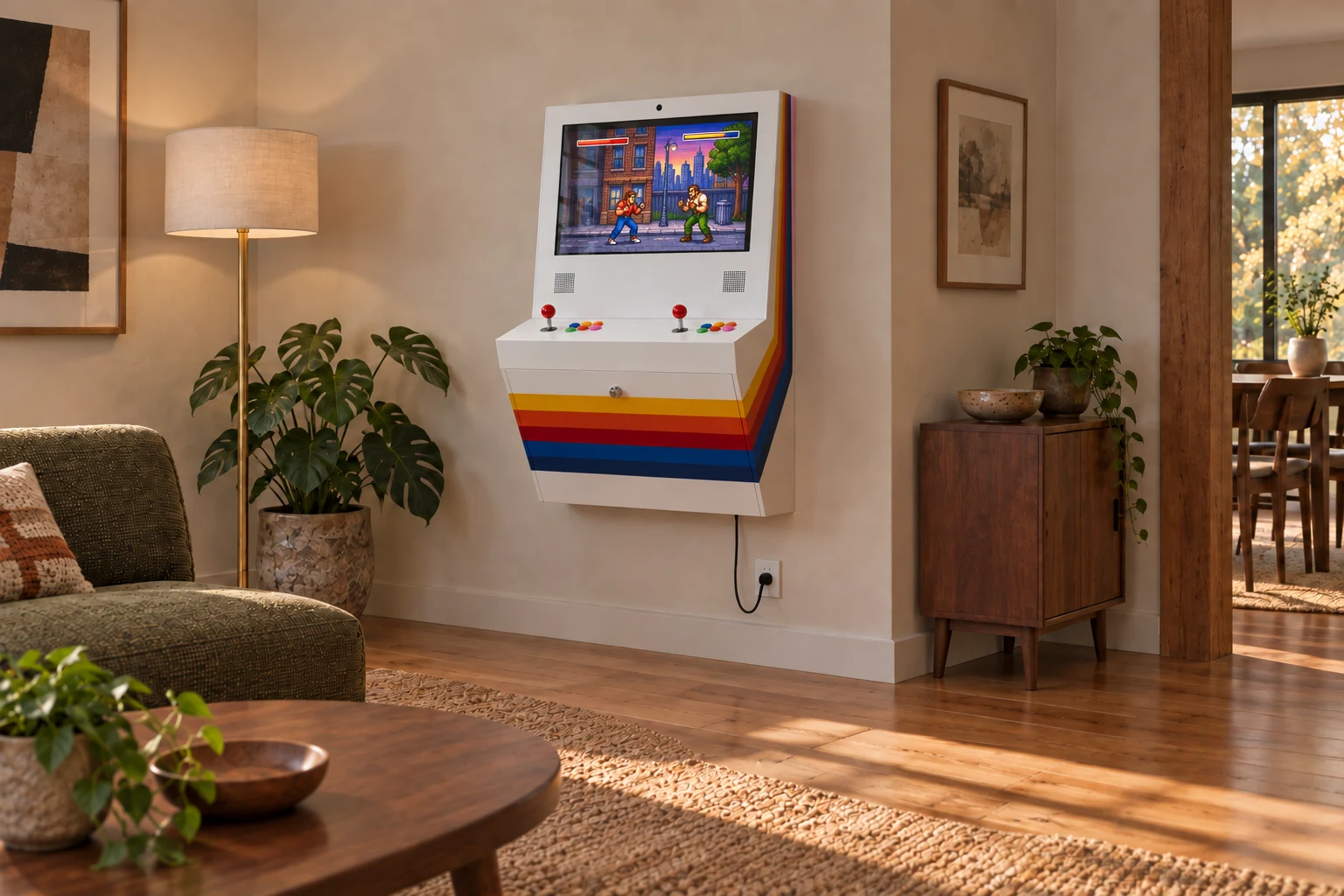
A quieter wall in the same mid-century home gives the arcade its own place. The walnut, warm plaster and olive seating continue here; the cabinet adds the graphic color. Its permanent position leaves the familiar living room and routes through the home useful.
When you’re not playing
The cabinet holds the wall as the main object. Nearby shelving stays useful for everyday things, with a designated place for additional controls. Power routing belongs in the plan and should not disappear from every illustration.
When you are playing
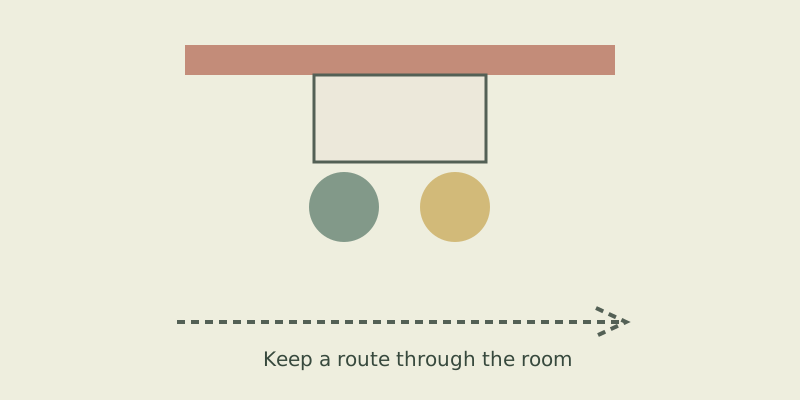
Step up to the cabinet’s built-in two-player controls; no wireless gamepad is required for this arrangement. The cabinet and its power connection stay fixed. Keep the approach and the route around players clear, including doors and neighboring furniture. The installed cabinet and the active playing area are different footprints.
Where the rest goes
Keep extra controls and small parts together nearby. Changing a control arrangement can change the playing space too; treat expanded setups as separate configurations rather than additions that cost no room.